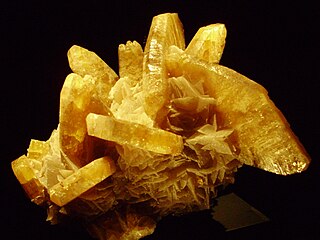
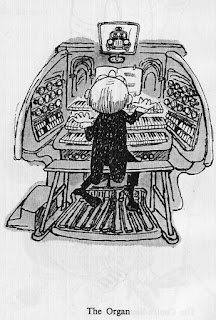
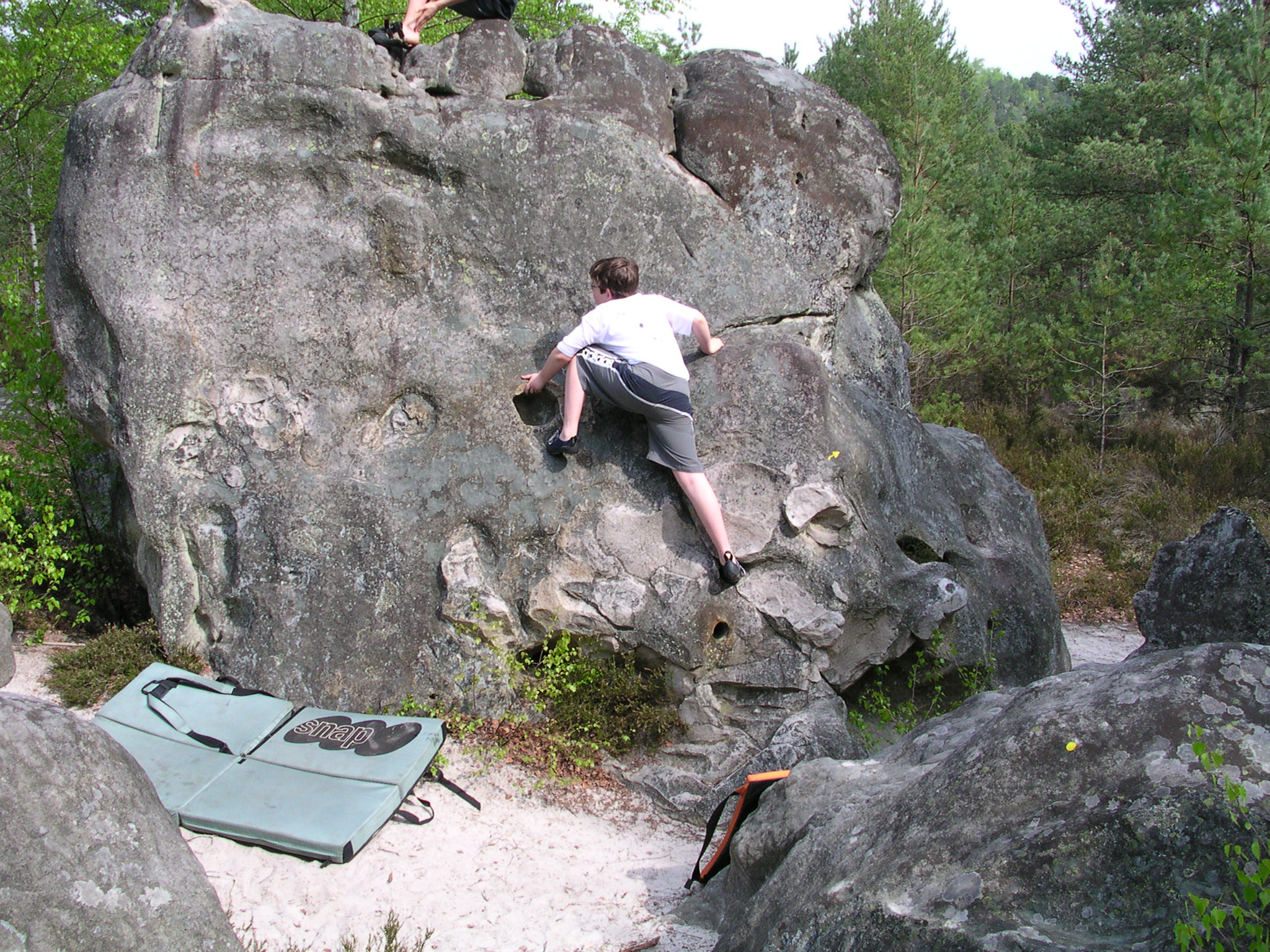
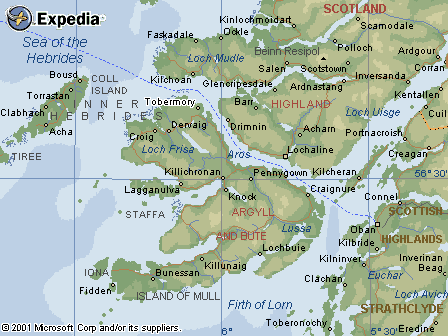
Oak and willow

One of four short poems* written to hang on one of a number of small artificial trees intended to decorate a local church at Christmas 2010.

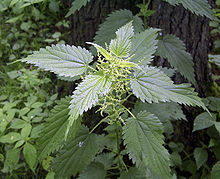
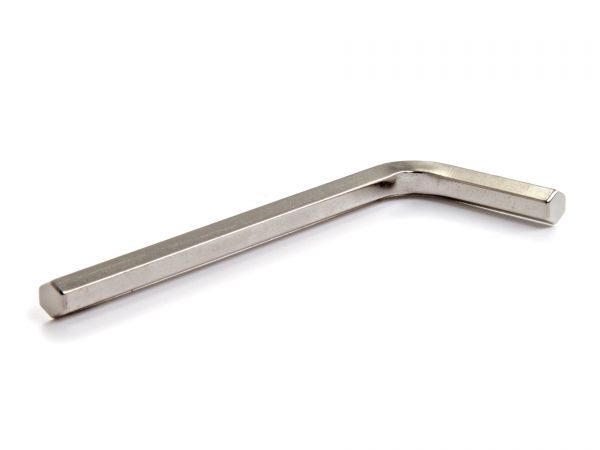
Hearts of oak, once our defences,
Now support our garden fences.
Willow, though, still guards one’s wicket
(Other timbers just aren’t cricket).

*The others are Hug a tree, Poet-tree and The Music Tree.

[Images: Wikimedia Commons]
Posted in MultiVerse | Tagged , | Leave a comment

Plan of atttack

Somewhere, there’s a command centre that coordinates Nature’s assault on our garden. I can almost hear the orders being barked out to the assembled forces. . .


“Right-ho, chaps, we’re ready for the action to commence.
The enemy is sleeping and will put up no defence.
Our spies have infiltrated, on their threefold pairs of legs,
And mined the field of battle with their countless tiny eggs.

“By now, those eggs have hatched, and our latest information
Is that thousands of their larvae are now wreaking devastation.
Phase Two sets off at midnight – pay attention at the back!
You gastropods will hug the earth and lead the ground attack.

“You’ll decimate the veg patch as you ravage and despoil
All soft green shoots that dare to poke their heads above the soil.
Beware though, slippery warriors, for the enemy’s renowned
For scattering toxic pellets and crushed eggshells on the ground.

“At crack of dawn, Phase Three will start: you feathered, winged brigades
Will launch from all directions your coordinated raids.
Now, air-troops, you must set your course and from it never swerve:
The enemy will wave its arms, but you must keep your nerve.

“Peck off all fruits and flowers, hack into juicy leaves,
And watch those gardeners despair at what your air assault achieves!
Today shall be our day! But for them, a day of sorrow.
Once more unto the breach, lads – and we’ll do the same tomorrow!”

[Image: Ink19.com]
Posted in MultiVerse | Tagged , , , | Leave a comment

ExoMars Rover

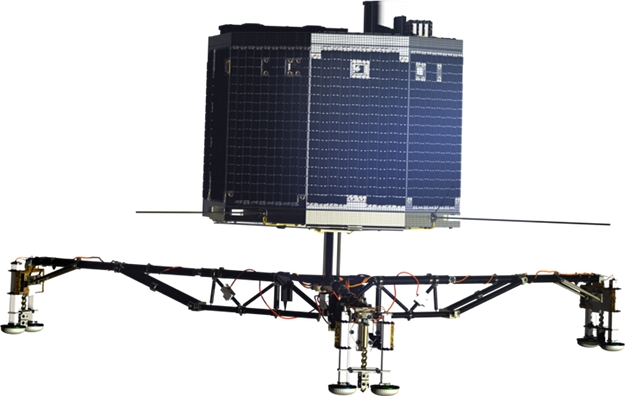
The European Space Agency and NASA have set up the ExoMars Programme to investigate the Martian environment. One of its aims is to look for exobiology (signs of past and present life). The ExoMars Rover is one of two autonomous rovers designed to be landed on the planet in 2018, and will be equipped specifically for that purpose including PanCam, a stereoscopic panoramic imaging system designed by the UK’s Mullard Space Science Laboratory.

A lanky-necked Rover with two beady eyes
Descends from a sky-crane through dust-laden skies.
From the Earth come “Hurrahs!”
As it settles on Mars,
And then comes the signal: “Go forth , analyse!”

Powered by sunlight and bristling with gear,
The Rover will map the terrain far and near
Using PanCam and software,
To sort out a spot where
Some exobiology might just appear.

Then Earthlings will sort out which target looks right,
And the Rover will plan out its route to the site.
It’s got six wheels to drive it,
And to help it survive, it
Has heaters to make sure it’s warm overnight.

There’s a drill to get samples from two metres deep,
With a built-in spectrometer, giving a peep
At the rock in the raw,
So its studied before
It’s degraded. Such instruments do not come cheap!

The samples get crushed and inspected, and then
The Rover will do it again and again.
But, I ask with respect,
Can it hope to detect
Those rascally Martians, the Little Green Men?

[Artist's impression from European Space Agency]
Posted in MultiVerse | Tagged , , , , | Leave a comment

Chondrules

These ‘primitive’ meteorites preserve evidence from the formation of the Solar System and invite questions about even earlier times.

In the universe’s emptiness, a giant molecular haze
Collapsed because of gravity (which everything obeys).
Its primal specks collided, becoming molten grains
Which cooled down very quickly (for equilibrium reigns!).
These rounded blobs were chondrules: with silicates aglow,
Like olivine and pyroxene, as modern tests can show.

A solar nebular disk formed in the vastness of the voids,
Precursor to our Sun and planets, moons and asteroids.
The chondrules, in this milieu, found these asteroids attractive
And forced themselves upon them, but soon became their captive.
You’ll only find a chondrule locked in stony meteorites
That haven’t been re-melted: that’s the sort now called chondrites.

So if you spot a chondrite, with a chondrule crew on board,
Just think what ancient provenance is in its structure stored!
It holds, untouched, a record of the Solar System’s birth
Some four point five six billion years before our time on Earth.
But that invites another thought: whence came those primal specks?
Perhaps it’s better not to ask – we’d all be nervous wrecks. . .

[Image from Minnesota State University]
Posted in GeoVerse | Tagged , , , , | Leave a comment

Poet-tree

One of four short poems* written to hang on one of a number of small artificial trees intended to decorate a local church at Christmas 2010.


I’ll hang a poem on a tree
And leave it for posterity.
And if, perchance, my verse you see,
Remember me – and thank the tree.

*The others are The Music Tree, Hug a tree and Oak and willow.

[Image: Clea Danaan]
Posted in MultiVerse | Tagged , , | Leave a comment

The music tree

One of four short poems* written to hang on one of a number of small artificial trees intended to decorate a local church at Christmas 2010. This tree would represent the church’s organists.


The roots of rock and symphony,
Are pitch and tone and measure.
Composers channel them, like trunks,
To branch out for our pleasure.

*The others are Poet-tree, Oak and willow, and Hug a tree

[Image from lithe.wordpress.com]
Posted in MultiVerse | Tagged , | Leave a comment

Hug a tree

One of four short poems* written to hang on one of a number of small artificial trees intended to decorate a local church at Christmas 2010.


Stop awhile amid your bustling:
Listen to my branches rustling,
Hear those birdies sing with glee,
Then hug me tight, for I’m a tree.

*The others are Oak and willow, Poet-tree and The Music Tree.

[Image: Unilang.org]
Posted in MultiVerse | Tagged , | Leave a comment

Joan zone

You can see strange apparitions while practising the organ in an empty church . . .


A feather-dusting phantom called Joan
Has a cleaning technique all her own:
Just a whisk and a flick
With her tickling stick,
And the world is a cobweb-free zone.

[Photo from flapperdays.blogspot.com - not the real Joan, though]
Posted in MultiVerse | Tagged , | Leave a comment

The Owl, the Pussy-cat and the telescope

The distance of relatively nearby stars can be found by measuring their positional change against the ‘fixed’ stars as the Earth orbits the Sun; and there is a known calibration of distance with brightness for ‘Cephid variable’ stars. But the rest had to wait until technology allowed the spectrum of their light to be analysed in exquisite detail. Then you could classify them: a particular spectral type and the precise characteristics of line-pairs within the spectrum placed them in one or other of the regions in the Hertzsprung-Russell diagram. (This diagram plots data obtained from ‘nearby’ stars, and from it you can read off your star’s ‘absolute’ brightness – see The Sun and Hertzsprung-Russell.) Then, if you also know from observation how bright a star appears here on Earth, you can assume an inverse-square law was at work, and so calculate its distance. A certain wide-eyed and romantically inclined bird knew all this long ago.

The Owl and the Pussy-cat went to sea –
They’d decided to elope.
They took some honey, and plenty of money,
And the Owl took his telescope.
The Owl looked up to a star above,
And sang to a small guitar,
“O lovely Pussy! O Pussy my love,
Just how far away is that star,
That star,
That star?
Just how far away is that star?”

Pussy said to the Owl, “That’s just like a fowl;
I thought we were here to get wed!
They’re so far away, surely no-one can say?”
The Owl clicked his beak, and then said:
“We must sample the light from that star above
And measure how brightly it shines.
Then, using a prism, O Pussy my love,
We can check out its dark spectral lines,
Its lines,
Its lines . . .
We can check out its dark spectral lines.”

A little while later, they’d got all the data;
Then a Piggy-wig watched them, aghast,
As they had a great tussle with Hertzsprung and Russell.
But they got to an answer at last.
“Oh Owl, that was thrilling! But look – that Pig’s willing
To sell you the ring in his nose!”
So, wed by a Turkey (which was shockingly quirky),
They danced by the light of the stars,
The stars,
The stars . . .
They danced by the light of the stars.

[Image from elfwood.com]
Posted in MultiVerse | Tagged , , , , | Leave a comment

Dora the borer

In the walls of some old Sussex buildings are blocks of chalk (‘Top Chalk’) from the shore-exposed eroded surface of the Chalk in Sussex, used as cheap infill on the less visible parts of the structure. The blocks are often peppered with holes: larger ones made by piddocks, and smaller ones bored by the marine bristleworm Polydora ciliata. In its larval form or when very young, Polydora invades the shells of oysters and mussels, irritating the molluscs; they respond by secreting repair material that can leave the shell blistered.

Polydora ciliata, my full Latin name,
Affords a respectable aura;
But to oysters and such I’m a troublesome dame,
And they know me as ‘Dora the Borer’.

I’m a polychaete worm with bristly projections,
Which are handy, and help when I’m boring.
My tentacles wave, making menu selections
From my burrow – I don’t go exploring.

I do like to drill in CaCO3,
And to burrow in wood and in clay.
(I practised on oysters who lived in the sea –
I was young then, and wanted to play!)

The holes that I make are distinctively small:
Compared to the piddock’s they’re wee.
Look out for them: next time you see in a wall
A block of Top Chalk, think of me!

[Drawing from www.1902encyclopedia.com]
Posted in GeoVerse | Tagged , , | Leave a comment

Swan talk 3

It’s July 2010, Having got their long-promised new plinth and briefly dabbled their feet in its flowing water (see ’Swanderful), the bronze swans in Horsham’s Swan Walk shopping centre have for some time again been teetering over a water-less landing site.

Swan Walk’s swans, iconic things,
Are hovering on cast-bronze wings.
Passing by, I heard them shout
(In rough translation), “Why the drought?”

For ages now, their pond’s been dry.
I’m not surprised they’re wondering why,
For they can have no understanding
Of where the water’s gone for landing . . .

The leading swan (whose voice was crisp,
But suffered from an awful lisp)
Said, “Landing on that bone-dry plinth
Would break our legs and make us winth.”

It made me think. I’ll not be hesitant,
I’ll write a letter to The Resident
To make the case that Horsham oughter
Turn on the tap ­– bring back their water!

(The water did eventually return for the blink of an eye, but then disapperaed again . . .)

Posted in HorshamVerse | Tagged , | Leave a comment

Clouds

Clouds often have interesting shapes. Despite the arguments of science, I reckon there are a fixed number of them, which just keep going round and round the world.


When I was a lad, I glanced up at the sky
Just as a castle-shaped cloud drifted by.
Would it ever come back? I hoped it would try;
But it hasn’t done yet, and I’m wondering why. . .

I learned that a cloud is a transient thing.
When the atmosphere’s right, its conditions will wring
From the air any water it cannot contain:
Each cloud is unique, and will not come again.

But now that I’m older, I look at the sky
And I want to believe that those clouds do not die.
That castle-shaped cloud will appear, drifting by;
But it hasn’t done yet, and I’m wondering why. . .

[Image from InternProgram360.com]
Posted in MultiVerse | Tagged , | Leave a comment

Ant antics

It’s July, and I’ve spotted a worker ant, struggling across some paving slabs carrying what looked like the wing of a small moth in its mouth. It couldn’t have been easy: the wing was sticking up near-vertically and being blown about by the breeze. She must have had a good reason for all her efforts.

Look! There’s an ant with a wing in its mouth,
Being blown to and fro by a breeze from the south;
But why would an ant be carrying a wing?
Self-adornment, maybe – a sort of ant bling?

Now she’s pulling it into her nest down below.
P’raps she’ll frame it and name it and put it on show,
And her ant friends will scoff at this formic upstart:
“You’ve been at the aphids again. That’s not art!”

I know what she’s up to. At the end of July
The drones and the queen ants will take to the sky
For a frenzy of mating and airborne attraction.
And this ant, a worker, wants some of the action.

So she’s thought of a way to pretend she’s a queen:
She’s secretly building a flying machine!
With six legs to pedal it, there’s plenty of power
To flap her new wing with for hour after hour.

She’ll test it out soon, perhaps add more wings,
And show all the drone ants she knows a few things.
(Here’s one thing she knows that would fill them with dread:
Soon after their flight, all the males end up dead. . .

[Image: Queensland Government]
Posted in MultiVerse | Tagged , | Leave a comment

Oh, I wish I could keep all me teeth

Sharks’ teeth are constantly replaced throughout life: multiple rows of replacement teeth grow in a groove on the inside of the jaw and steadily move forward as in a “conveyor belt” formed by the skin in which they are anchored. Typically a shark has two to three working rows of teeth with 20 to 30 teeth in each row, although a whale shark has about 300. The rate of tooth replacement varies from once every 8–10 days to several months, some sharks losing 30,000 or more teeth in their lifetime. That’s why the teeth of ancient sharks turn up in abundance in certain strata, and are easy to spot at low tide on some sandy wave-washed beaches. Here, a shark laments such waste.

Oh, I wish I could keep all me teeth;
Now they litter the sea-floor beneath.
I can’t help lamenting
Such a waste of good dentine.
Oh, I wish I could keep all me teeth.

Evolution, it seems, has designed
That we always have gnashers to grind:
So, like soldiers at war,
When one falls, there are more
To replace their lost mate from behind.

But geologists like to find teeth,
So I solemnly hereby bequeath
My discarded enamels
To you beachcombing mammals.
I still wish I could keep all me teeth. . .

(With apologies to the Queen of Poemology, Pam Ayres.)

[Photo: Joshua Singer/Getty Images]
Posted in GeoVerse | Tagged , , , | Leave a comment

An der schönen, blauen Donau

A local mobile ice-cream man periodically announces his presence with a few bars of this waltz by Johann Strauss, junior, played by his van’s minimal sound system over and over again without accompaniment or musical feeling. I felt that some form of action was needed. . .


A waltz by Johann Strauss
Echoes round and round the house
As an ice-cream van blares out its tinny strain.
That tune that Johann penned
Will soon drive me round the bend.
I offer up a futile prayer for rain. . .

Wait, a cunning plan I’ve got!
I’ll assemble at the spot
An orchestra, and wait for his next call.
Then we’ll join in on the beat:
There’ll be dancing in the street,
And the neighbourhood will come and have a ball!

But we’ll play the piece right through,
Nothing less, of course, will do.
Then we’ll play all Strauss’s other pieces too.
Ice-cream will flow like honey,
And he’ll rake in so much money
He’ll retire to where the Danube is so blue.

Stop! This grand orchestral scheme
Is a fantasy, a dream!
(He’d return with ‘Greensleeves’ blaring from his van
With the melody cut short,
Expecting musical support.)
I s’pose I must accept the ice-cream man. . .

[Image from www.medienwerkstatt-online.de]
Posted in MultiVerse | Tagged , , , , | Leave a comment

First impressions

Our human condition limits our ability to perceive and experience the realities of the universe. At times in our history, we have drawn ‘obvious’ conclusions about them from what little we have been able to sense; for example, everyone can see the sun clearly going round the earth, like the Moon and stars do. But science has looked beyond the obvious.

First impressions can mislead.
So change your point of view
To get a new perspective; then
You’ll see the world anew.

We see the amazing range of life, all creatures, great and small.
That’s why we used to think we were the greatest of them all.
The dinosaurs thought much the same, before we came along;
It only goes to show just how our boasting was all wrong.

We see the skies above our heads: the Universe surrounds us.
It’s only natural, then, to think it all rotates around us.
But, thanks to dedicated men who measured with precision,
We came to learn our place in space demands a wider vision.

We think time passes at the rate our clocks and watches tell:
The Greenwich pips and Big Ben’s strike confirm that all is well.
But that’s because we never move at near the speed of light
When time’s dilated. Then whose watch has got the time just right?

Diseases were a mystery: they’d weaken and they’d kill.
It must be something bad we’d done – or witchcraft – made us ill.
But scientific medicine has put such fears at ease:
And now we know that natural causes underlie disease.

The Earth on which we humans stand seems solid; and the pages
Of maps of continents and seas have served us well for ages.
But plate tectonics is for real: geologists hare proved
That ocean ridges make new crust, and continents have moved . . .

Surely matter is eternal? That at least can be observed.
Don’t basic laws of physics say that matter is conserved?
Try telling that to Einstein, or to people in Japan.
The energy in matter’s made its mark on every man.

First impressions can mislead.
So change your point of view
To get a new perspective; then
You’ll see the world anew.

Posted in MultiVerse | Tagged , , , , , , , , , | Leave a comment

Horsham’s Marmite

Angela Connor’s giant watery sculpture at the meeting of Horsham’s West Street and Bishopric had been resting at the bottom of its pole for most of 2009 while the Council wondered whether to repair it or replace it. In December, they decided on the former option and it rose again on 8 May 2010.

The Shelley Fountain spent long days
Supported by two RSJs,
Locked up inside a metal cage
And suffering the ills of age.

It’s Horsham’s Marmite, loved and hated.
So should the thing be reinstated?
Its busted guts would need some mending,
But would the work be never-ending?

Would repairs be economic?
Would the cost be astronomic?
Horsham folk were sore divided.
The Council dithered, then decided.

Now its plumbing’s back in action,
Horsham’s own unique attraction.
The Shelley Fountain’s operational,
A Rising Universe – sensational!

[Photo: BBC]
Posted in HorshamVerse | Tagged , | Leave a comment

Horsham Clay

On their geological map of the Horsham area, the rascally folk at the British Geological Survey have designated the subsoil below my back garden as “Tunbridge Wells Sand”, even though it includes a range of deposits, some sandy, some clayey. Having recently encountered it with a spade, I felt I should write to complain. This is a draft.


Dear Sir or Madam, I write
To complain of the term you apply
To the subsoil that’s under my house.
I would value an early reply.

I wish to report a misnomer
Of the sort that ought to be banned.
I refer, with respect, to the stratum
That your map labels “Tunbridge Wells Sand”.

Now, I know what sand looks like and feels like,
For I lived by the sea in my youth.
How dumbfounded I was to discover
That your term was so far from the truth!

I have just dug a hole in my garden,
Quite deep, for a new soakaway.
What I found, when I’d shifted the topsoil,
Is what anyone else would call clay.

Well, if Tunbridge Wells folk think that’s sand,
I will happily let them all play in it.
They can jump in the hole in my garden
And make their “sand” castles all day in it.

Grinstead and Wadhurst and Weald:
They’re all clays with their own local name.
So why can’t the stuff that I found
In my garden be treated the same?

Let Tunbridge Wells keep its own Sand,
Then that name will be honest and true;
And the layers of clay in between
You can set about naming anew.

You have put Horsham Stone on your map,
So now, Sir or Madam, I pray
You’ll amend and re-draw all your charts
To identify our “Horsham Clay”.

I await your reply with great interest
For I trust we can strike an accord on
This name that’s so long overdue.
I remain, yours etcetera, Gordon.

[Image: istockphoto.com]
Posted in GeoVerse | Tagged , , , | Leave a comment

FAQs

Many websites have what they call Frequently Asked Questions, with their accompanying answers. The aim is to anticipate what most visitors to the site might want to know. But I’m not ‘most visitors’.

I’ve looked at all the FAQs
From the first one to the last,
But the Questions I want answers to
It seems aren’t Frequently Asked.

I’m sure that websites do their best
To give the answers needed;
For me, their efforts aren’t enough.
Why have they not succeeded?

I can’t be asking often enough. . .
So here’s my cunning plan:
I’ll stop each person in the street,
Each woman and each man,

And put my Questions to them all.
I’ll keep a careful score,
Then monitor those FAQs
To see if I need more.

How many times is ‘frequently’?
How often must I ask
My questions so they make the grade?
It seems a daunting task.

So just in case that doesn’t work,
I’d welcome more suggestions –
Perhaps a website that will list
Infrequently Asked Questions?

[Image from University of Central Florida]
Posted in MultiVerse | Tagged , , | Leave a comment

Lists

To-do lists are a pain. Here’s how to relieve it.


I’ve got a little list of all the things I ought to do.
(I’m sure I’m not alone in this – I bet you’ve got one too?)
It keeps on getting longer, even though I never stop:
When I cross one off the bottom, two more go on the top.

I tried to subdivide it, each a separate mini-list;
But keeping track of where they were just drove me round the twist.
So I made a list of all the lists, but that made matters worse.
I think the Devil’s in those lists – they’re nothing but a curse.

So here is my solution. It’s a single list, no more,
And one that only lengthens; but eventually, I’m sure,
It’ll make you feel contented – maybe just a touch conceited:
It’s a list of all the jobs that you have finished, done, completed!

[Image from indigoimage.com]
Posted in MultiVerse | Tagged , | Leave a comment

Hoovering the garden

If you ever have to empty the polystyrene balls from a beanbag, don’t do it outside in the garden on a windy day – they jump about and blow everywhere and have to be hoovered up. I did it recently, and started to imagine what people might have thought if they’d seen me.

I’ve just been out hoovering the garden –
Well, it’s ages since last it was done.
The folk who passed by were all smiling;
I expect they were thinking, “That’s fun!”

And they must have told people about me,
For soon after, some big blokes appeared
All dressed in white coats, who said sternly,
“Come quietly with us, mate. You’re weird.”

I explained that I’d hoovered the garden
To vacuum up lots of white spheres.
That must have convinced them I’m normal,
For they asked, “Have you done it for years?”

They said they’d a place with a garden
I could hoover up spheres that they had,
And they’d take me there now in their wagon.
I refused – they were clearly quite mad.

[Image: Facebook]
Posted in MultiVerse | Tagged , , | Leave a comment

Ice and fire

It’s April 2010, and a volcano below Iceland’s Eyjafjallajökull glacier has erupted, throwing abrasive particles kilometres into the air which has shut down all air travel in northern Europe.


Iceland, famed for ice and fire,
And banks that lose your cash,
Has hit the headlines once again
Erupting plumes of ash.

Atop the Mid-Atlantic Ridge,
A fit-to-burst volcano
Blasts through a glacier with a name
Pronounced as only they know.

So now, no contrails scar the skies,
The air is strangely hushed;
For aircraft are not built to fly
Through fine volcanic dust.

It’s tough for some, but proves a point:
The Earth’s still hot below.
That heat is how we all survive –
It’s making sure we know. . .

[Image: ouramazingplanet.com]
Posted in MultiVerse | Tagged , , , | Leave a comment

Wellsite

A depressed zeolite, named after the Yale chemistry professor Horace Lemuel Wells (1855–1924), explains how it lost its individuality when in 1997 the International Mineralogical Association decreed it was just a variety of Phillipsite or Harmotome. There’s now a letter D against its entry in the organisation’s List of Mineral Names (http://pubsites.uws.edu.au/ima-cnmnc/IMA2009-01%20UPDATE%20160309.pdf).


I’m a zeolite mineral, now nameless.
But I once had my moment of glory
And a name: it was ‘Wellsite’ they called me.
But it didn’t last long. Here’s my story.

I was picked up in North Carolina
And soon found international fame:
For a century I was a mineral
With my own individual name.

My description was widely reported:
(Pratt and Foote, Am J Sci, ’97).
After years spent cooped up in a geode,
I thought I’d ascended to heaven!

But my raptures were cruelly ended
When the IMA’s list got re-edited
And the dread letter D was appended,
Meaning ‘Wellsite’ had now been ‘discredited’.

Was it something I’d done? I am innocent
(Lustre vitreous, whiter than white).
It’s a wicked miscarriage of  justice.
Obscurity beckons. Good-night.

[Photo: Middle Earth minerals]
Posted in GeoVerse | Tagged , | Leave a comment

A moving tail

Reports reached me that a small, well-travelled canine acquaintance of mine had been helping people in a far-off land move house. I could only conclude that he had been putting his considerable people-management skills to good use.


Hi, I’m World-Wide Wallace,
You’ll have heard of me before*.
I’ve just set up a business
That can move you, door to door.

I’ve done a long apprenticeship
In all kinds of house removal
From continent to continent,
Winning customers’ approval.

I do things very subtly,
Keeping quiet and out of sight,
But poke my nose in everywhere
To check it’s all done right.

So e-mail soon to hire me,
For I’m always in demand.
You will find, with World-Wide Wallace,
That your wish is my command.

(* He’s a dachshund – see World-wide Wallace.)

[Image: Amazon]
Posted in MultiVerse | Tagged , , , | Leave a comment

The flint miners of Cissbury

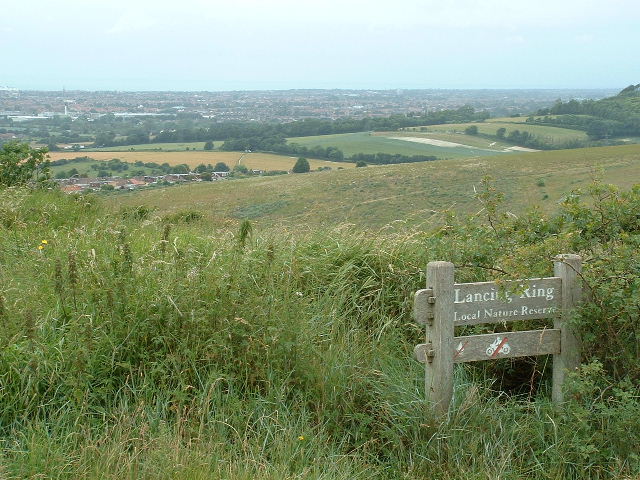
Cissbury Ring, a hill-top near Findon, Sussex, is indented with infilled Neolithic flint mines. It was one of the major commercial and industrial nerve centres of the Neolithic world, and supplies of Cissbury flints have turned up in northern England and all over Europe. A teacher at school once mentioned that flint arrowheads can still sometimes be picked up on the South Downs. Ever since, I’ve kept my eyes peeled, but to no avail.


The flint miners of Cissbury were tough and hardy bands.
Five thousand years ago with red deer antler picks and hands
They dug straight down into the Chalk, some forty feet or more,
Then hacked out spoke-like tunnels on the bell-pit’s flinty floor.

The flint was what they’d come to get: black, hard, and good for knapping.
Once out, each nodule would be flaked on site, by deft and skilful tapping.
A flake of flint is hard and sharp, but a practised stone-age hand
Could fashion tools and arrowheads for trade across the land.

It’s said that flinty arrowheads can still be found today,
In northern parts of England, and in Europe – far away
From Sussex, where those miners left, as far as I can see,
Just dents on Cissbury’s summit – and no arrowheads for me!

[Image: Steyning Museum]
Posted in MultiVerse | Tagged , , | Leave a comment

Walkies

These days, a dog-walker is obliged to clean up anything their animal leaves on the pavement. I wondered how odd it must look to the dog.

We dogs are very puzzled by you humans and your ways.
We take you out for walkies in the neighbourhood most days,
And often change our route so that you get a change of view;
But you seem to be obsessed with bagging up our doggie poo.

Why is it that you humans find our droppings so attractive?
It’s not as though the stuff is horticulturally active.
We try to stop you doing it, by pulling on your lead,
But nothing works. It must be some deep psychological need.

When horses take their humans out, they seem to get away
With leaving piles and piles of poo along the Queen’s highway.
Their humans never tag along with plastic bags and scoops
To commandeer for who-knows-what their steaming horsey poops*.

It really is embarrassing, this manurial attraction,
It has to stop; we dogs must take some managerial action.
Next time we take you out, beware! We’ll take chunks out of you
If you should ever, ever stoop to picking up our poo.

[* An editorial note: That’s true, but gardeners, with their spade,
Will sometimes make a bee-line for the spots where dung gets laid.
They do it rather furtively: they’ll wait till no-one’s looking,
Then shove it in their bucket, even though the stuff’s still cooking.]

[Image: safeandsoundpets.com]
Posted in MultiVerse | Tagged , , | Leave a comment

Ray’s day

In September 2002, at Whitemoor Haye gravel quarry in Staffordshire, digger driver Ray Davies spotted something unusual in his bucket. It turned out to be the front end of a middle-aged woolly rhinoceros. These huge, 1.5 tonne creatures became extinct some 12,000 years ago, probably because they couldn’t cope well with severe cyclic climate change (up to 7ºC in a thousand years) and the hunting activities of early humans. Academics like to give names to such finds.


A woolly rhinoceros said,
“I think before long I’ll be dead,
For I can’t stand these changes
In temperature ranges;
It’s messing up things in my head.

“We rhinos like climate stability:
We have poor adaptive ability –
We’re built for the cold.
I’m not very old,
But I’m starting to feel my fragility.”

But the climate refused to deliver,
So the rhino expired with a shiver.
Quick-frozen he lay
Out of predators’ way,
By a braided periglacial river. . .

In a quarry at Whitemoor Haye,
A JCB driver called Ray
In 2002
Caused a hullabaloo
When he looked in his bucket one day.

He had dug up that rhino’s front end!
Academics began to descend
To share in his fame,
And they thought up a name
For their woolly rhinoceros friend.

After pondering day after day
In their quaint, academical way,
They cried with one voice,
“There is no other choice:
The name of our rhino. . . is Ray!

[The photo, byGary Coates, University of Birmingham, is of the rhino, not Ray. . .]
Posted in GeoVerse | Tagged , , , , | Leave a comment

The Bubnoff

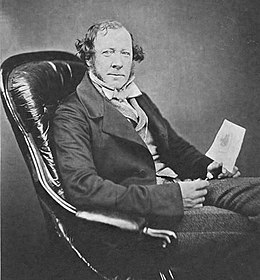
A new unit was proposed in 1968 as a standard measure for geological movements and increments, named after Serge von Bubnoff (pictured below). For example, the average rate of erosion over the Earth’s landmasses has been estimated as about a foot per thousand years, or 30 Bubnoffs. It gets unmanageable at the human scale, though: a brisk walk is about 40 million Bubnoffs. I’m jealous.

The Bubnoff unit, whose symbol is B,
Is far too small for people like me.
One micron a year is a speed that’s so small
Not even a snail would detect it at all.

And what could you measure it with, might I ask?
No ruler that I’ve ever owned fits the task.
It’d have to be stable for aeons of time,
Free from corrosion, protected from grime.

I’d quite like a unit that’s named after me,
But I’d want it to measure a thing you can see,
Like poems in Stonechat*. So, if there were four,
You’d clock up four ‘Judges’ as that issue’s score.

Then folk the world over would know it was time
To count up in ‘Judges’ their output of rhyme.
Immortality beckons; life won’t be the same
Once the unit of verse is the Judge family name.

* Stonechat is the newsletter of the Horsham Geological Field Club.

[Album photo: casiodor.com]
Posted in MultiVerse | Tagged , , , | Leave a comment

Ecological Hosting

Thanks to the world-wide web’s interconnections, my web-wise son and a West Yorkshire company called Ecological Hosting, this blog’s website parent, now deceased, used to beat under the sun on the other side of the Atlantic Ocean.

This website’s been preoccupied
By ecological fervour,
It’s moved its digital residence
To a solar-powered server!

It’s eco-friendly, clean and green,
And humming night and day.
So point your browser without guilt
To geoverse-co-uk.

Under the Californian sky
You’ll find it, gently toasting.
It’s up and running once again
Thanks to Ecological Hosting.

(Footnote: In March 2011, all these poems were moved to wind-powered servers – see Blow, blow, thou winter wind).

Posted in MultiVerse | Tagged , , , | Leave a comment

SHRIMP-date your zircon

A crystal of zircon (zirconium silicate) contains trace amounts of uranium which decay radioactively to lead, and can have several concentric zones of growth of different ages. The Sensitive High Resolution Ion MicroProbe (SHRIMP) technique uses a double-focused high-energy ion beam and mass spectrometer to determine the age of a tiny area (<30 µm diameter) of a single crystal.

Engagement rings with zircon
Look sparkling and attractive
But zircons trap uranium
Which makes them radioactive.

So do SHRIMP-date your zircon
On the day that you get wed –
Then check again in fifty years
In case it’s full of lead. . .

[Photo: Ministry of Natural Resources and Ecology of the Russian Federation]
Posted in GeoVerse | Tagged , , , | Leave a comment

Hilton’s highlights

On the north-west coast of Scotland, the Stoer Group of Torridoniam sandstones are exposed at Stoer Bay. Within the purple sandstone are thin layers believed to have been formed by ancient cyanobacteria making a mat which bound the sediment surface together, as in the famous stromatolites of Australia’s Shark Bay. But you don’t have to go to the wild west of Scotland to see them.


Gentlemen, when next in Town,
Seek out that tower of high renown,
Park Lane’s Hilton (one of many),
And, with your hand-lens, spend a penny.

Around this most luxurious loo
Are algal mats exposed to view
In sections through Precambrian sands.
Examine them – then wash your hands.

[Photo: Hilton Hotels and Resorts]
Posted in GeoVerse | Tagged , , , , , | Leave a comment

Man in the Moon

Man has visited the moon six times between 1969 and 1972, but on 1 February 2010, President Obama announced budget plans which, if accepted by Congress, will effectively kill the Constellation program that called for a return to the moon by 2020.

The US has not got the money
To put man again on the moon,
So their astronauts won’t be a-roving
The regolith any time soon.

It’s been landed on, orbited, probed;
It’s been sampled, impacted and tested.
A whole load of junk has been left there,
And a whole lot of dollars invested.

Now Obama has cancelled all landings,
And his critics in NASA are mad;
But no matter what anyone else thinks,
The Man in the Moon will be glad . . .

[Image by Ike Morgan, from gutenberg.org]
Posted in MultiVerse | Tagged , | Leave a comment

Your face is familiar

Ever had that feeling that you know someone’s face but can’t put a name to it? Trouble is, while you’re working out who it might be, you can’t have a proper conversation with them, and it’s only when they’ve gone that you remember who they were.

Your face is familiar . . . I think we have met,
But when the encounter was, I quite forget.
Was it yesterday, last week or several years past?
You’re not quite the same as when I saw you last.

Have you put on some weight? You used to be lighter;
And that dark hair you had – now it looks a lot whiter.
Oh dear, you’re offended. Well, I would be too
If Time had changed me in the way it’s changed you.

Your name . . . it was just on the tip of my tongue,
But it’s difficult, now that you’re no longer young.
Are you still friends with Whatsname, that weird-looking bloke?
He did like his drink, and he didn’t half smoke.

I don’t think you smoked, though your teeth are quite stained,
And you’re looking so knackered, exhausted and drained –
It must be your skin tone. To put it succinctly,
It looks rather leathery, dried-up and wrinkly.

I’m afraid we must mow call a halt to our meeting,
For my breakfast is ready – it’s time to be eating.
We must meet again soon, when my memory’s clearer.
Same time and same place, then? In front of this mirror?

[Image: MyFitnessStudioW10]
Posted in MultiVerse | Tagged , , | Leave a comment

Age

These days, people who sell you sharp knives or alcohol are supposed to convince
themselves that you are suitably old. At my age, it’s quite flattering when
someone actually asks me, but it does make me think. I consulted the
New York Times
and prepared my response,
ready for the next occasion . . .

Are you 18 years or older?” asks the lady at the till.
“It depends,” I say, “on what you mean by ‘you’.”
She glares, and I can feel the air acquire a glacial chill
As I try to give an answer that is true.

“My cells, you see, divide: they’re reproducing all the time,
And though it’s inappropriate to boast,
My bones are young and sprightly (though their owner’s past his prime) -
My skeleton is ten years old at most!

“Just fifteen years is all the time my muscles get to see,
And sixteen years for guts, before they go.
If your question is addressed to those inner parts of me,
The answer must predictably be ‘no’.

“‘You’ve got a lovely liver,’ someone said* the other day.
Not just lovely, but so young – about a year?
My red blood cells are younger still, no more than four months old are they;
And they’re the things that keep me in top gear.

“There are some parts of me that claim to be a certain age:
My eyeballs, bits of brain, and maybe heart
Have birth-certificated vintage, and as far as I can gauge
Are unsurpassed by any other part.”

I s’pose you think that’s funny,” says the lady at the till.
I have to ask the question, it’s the law.
I’ll let it go this time, and I will sell you what you want,
But next time, don’t be such a crashing bore.

* See No place to hide

[Cartoon: amtrek.net]
Posted in MultiVerse | Tagged , , | Leave a comment

Posh

I grew up with a vague notion about ‘posh’ people. I didn’t actually know any, although there was an ‘auntie’ who seemed that way to me.


Posh houses had Bow Windows,
Posh houses had no dust,
Posh houses smelled of Polish
And housed the Upper Crust.

Posh people had Hall Tables,
Black Telephones and Wine.
Posh people had a Motor Car
Which took them out to Dine.

Posh families had smart new clothes
In all the Latest Styles.
Posh families had all their teeth,
Which gave them Radiant Smiles.

Posh Man would work in London,
Travelling First Class on the train.
Posh Wife would have her friends round
Till he came back again.

Posh Children went to Prep School
For a Private Education,
Which kept them safely distant
From kids below their station.

Absorbing this as I grew up
From things that people said,
I didn’t fancy ‘Posh’ at all –
I’d just be Me instead.

[Image: Wrexham Property Gazette]
Posted in MultiVerse | Tagged , , | Leave a comment

The Santa test

A little consumer advice for little consumers.

There are too many Santas in Sussex;
Only one is the real one, I’m sure.
Wherever you go, you’re invited
To “Come and see Santa instore”

I thought I would call Trading Standards
And ask them to sort out the mess,
But it’s probably not in their remit
To deal with a Saintly excess.

So instead, I suggest that all children
Should memorise this little motto:
“To discover the real Father Christmas,
Go check out the smells in his grotto”.

If he stinks of fresh soap and deodorant,
And his boots reek of polish, I’d bet
He’s a stand-in, a Santa-clone copy,
The closest the shop folk could get.

But if there’s a hint of warm reindeer,
And his clothes have a slight sooty pong,
And he greets you by name when you meet him,
Then you won’t go so very far wrong.

I am certain the real one’s in Horsham,
But as I’m much too old to find out,
I write hoping Horsham’s fine children
Will dispel any lingering doubt.

If you sniff him out, write to the paper –
Do it now, do not waver or pause –
“Dear Sir,” you should say, “We’ve discovered,
In Horsham, the real Santa Claus!”

[Photo: Yoga Healthy]
Posted in MultiVerse | Tagged , , | Leave a comment

A Christmas carol

In 2009’s post-credit-crunch recessionary climate, Horsham Council reduced by three-quarters the amount it spent on Christmas lights. I overheard three spooky visitors giving their views on the situation.

In Horsham, the Spirit of Christmases Past
Materialised in Swan Walk,
Its candle ablaze. I stood rooted, aghast,
For the phantom had started to talk.

“Long ago,” quoth the spectre, its anger contained,
“Horsham’s lights were a joy to regard.
What Scrooge in the Council has this year ordained
That its budget be cut back so hard?”

Christmas Present appeared. “Big spending has ended,
For the pressure on costs is severe.
Taxpayers of Horsham would be well offended
If its lights cost the same as last year!”

A third apparition arrived on the scene,
Ghost of Christmas To Come, with its head
Black-hooded, a void where its face would have been,
And as silent as if it were dead. . .

As it angrily gestured, I shivered with fear,
And the other ghosts fled from its sights.
Then it vanished. But, strangely, its message was clear:
Happy Christmases aren’t made with lights!

[Image: John Leech, 1843 , from Wikimedia Commons]
Posted in HorshamVerse, MultiVerse | Tagged | Leave a comment

Making sense of the Universe

At Holmbury St Mary in deepest Surrey, is an outpost of University College London. In October 1965, a dozen members of UCL’s ‘Rocket Group’ moved to Holmbury House which, having been donated by the electronics company Mullard Ltd, became the Mullard Space Science Laboratory. It now incorporates a number of research groups, including one on Astrophysics.


Holmbury St Mary is rural,
A tranquil, remote sort of place.
Yet the quiet folk who work in its mansion
Are trying to make sense of space.

But Gamma rays, X-rays, UV,
Do not reach the Earth. What they do
Is send up a spacecraft or satellite
For an extraterrestrial view.

Radiations (electromagnetic),
Picked up by their sensors, are plotted;
And brains (those of Mullard Space boffins)
Conjure theories that leave one’s mind knotted.

AGNs, GROs, GRBs,
Compact binaries, quasars, the Sun,
Galactic dynamics and jets
Offer hours of head-scratching fun.

The furthermost thing they have seen
In the Universe, cold, black and vast,
Is a gamma-ray burst which was active
Thirteen billion long years in the past.

Four per cent of the mass of the cosmos
Is all that we currently know.
The rest is Dark Matter and Energy,
So they’ve still got a long way to go. . .

[Photo: John Barret, from Geograph.org.uk]
Posted in MultiVerse | Tagged , , , | Leave a comment

Peregrine Purple

It’s said that there are no rhymes for the word ‘purple’. Now there’s a challenge. . .

Young Peregrine Purple
Knows well that to burp’ll
Annoy Mum and Dad every time.
And that sort of twerp’ll
Know, too, that to slurp’ll
Be to soup-supping parents a crime.

Posted in MultiVerse | Tagged | Leave a comment

The Rime of the Ancient Astronaut

A remote-sensing instrument on India’s Chandrayaan-1 mission has found water on the Moon. It confirms suspicions previously raised by results from the Cassini and Deep Impact probes But it’s not water as we know it, but ‘molecules of water and hydroxyl (hydrogen and oxygen) that interact with molecules of rock and dust specifically in the top millimetres of the moon’s surface’, or very fine films of water coating the lunar dirt particles.


On the Moon they’ve found some water,
But it’s locked into the dust,
So you’d need to scrape the molecules
From the regolithic crust.

The problem has been aired before,
By Coleridge, I think:
“Water, water everywhere,
Nor any drop to drink.”

[Image: Cyber Cauldron]
Posted in MultiVerse | Tagged , | Leave a comment

Come naked!

Beales opened in Horsham recently, using this message to entice customers to buy their wares. But I needn’t have worried that local people would take them at their word.

There’s a shop that’s just opened in Horsham,
And its adverts are shockingly rude.
The message is clear: they’re suggesting
That you visit their shop in the nude.

But the good folk of Horsham are rising
As I write, and I’m very impressed:
They are gatecrashing Beales in their thousands,
Not naked, but properly dressed.

That’ll teach all those marketing whiz-kids!
They should realise, when push comes to shove,
We Horsham folk do what we want to –
We’re Sussex, and we won’t be druv.

[Photos: rotten.com and Suffolk's Unseen Archive]
Posted in MultiVerse | Tagged , , | Leave a comment

Quinquelocalina

The Mixon Rock, a reef of hard shelly Alveolina limestone 2km to the south of Selsey Bill near Chichester (known locally as Chi), protects the Bill itself from the worst effects of wave action. It contains the tests (shells) of the Eocene foram Quinqueloculina, whose spokeswoman is justifiably proud of her part in saving Sussex from the sea:


I’m Quinqueloculina,
A tiny Eocener.
My tests are choc-a-bloc
In Selsey’s Mixon Rock.

At Pevensey and Chi,
Romans built their walls up high,
Gaining strength by building wide,
Stuffed with Mixon Rock inside.

Now it came, that Roman core,
From a reef not far offshore;
So my part in its construction
Saved poor Selsey from destruction!

[Image: wiki.web.ru]
Posted in GeoVerse | Tagged , , , | Leave a comment

Maureen

I’ve never really done this. I’m scared it might come true.

Once, I read all my poems to Maureen.
By the end, I found Maureen was snorin’.
When she woke, she said, “Lad,
Your poems aren’t bad;
It’s your voice – it’s so dreadfully borin. . .”

Posted in MultiVerse | Tagged , | Leave a comment

Wildlife friendly

It’s a philosophy regularly trotted out by writers and broadcasters on gardening, but I don’t think they stop to ponder the implications.


Our garden’s wildlife-friendly,
But when wildlife comes to visit
It devastates our vegetables.
Now that’s not friendly, is it?

If wildlife won’t be nice to us,
I’ll go on the attack:
I’ll shout at them and be quite rude
Until they all turn back.

Then I’ll cover all the garden
With sheets of see-through plastic.
(Well, when food supplies are threatened,
The solution must be drastic . . .)

I’ll make some holes to let in rain,
Providing irrigation
Through special valves, which won’t admit
Those objects of vexation.

There’ll be some airlock openings
To ventilate the plot,
And automatic sun shades
For when the weather’s hot.

I’ll let in worms and hoverflies,
And pollinating bees,
For they are friendly wildlife
And may do just as they please!

Then we’ll look out at the garden
And think, “It’s such a shame.
Our garden’s wildlife-friendly,
But it isn’t quite the same . . .”

[Image of Harrod Horticultural's downloadable book: theenduringgardener.com]
Posted in MultiVerse | Tagged , , , , | Leave a comment

Spotless!

According to the presenter of the show at the South Downs Planetarium, the Sun is not behaving itself (it’s July, 2009). Its sunspot cycle, normally a fairly regular repeating cycle from virtually none to lots and back again, is overdue its next increase.


It seems the Sun has gone to sleep:
Its spots have disappeared
And not returned when they were due.
It’s really rather weird.

They’ve mostly been as regular
As a clock, well oiled and wound.
Eleven years each cycle took
On average, it’s been found.

When last this happened, Earth got cold
From 1645
For seventy chilly years, until
The spotless Sun revived.

But now we’re in a minimum
That’s stayed a tad too long.
I hope the Sun will wake up soon,
And nothing has gone wrong. . .

[Graph: Gaughan Bloggin']
Posted in MultiVerse | Tagged , | Leave a comment

Forever amber

They were carving it in Lithuania around 3000 bc, and it’s mentioned by Homer, Aristotle, Plato, Strabo, Theophrastus, and Pliny the Elder. More recently, it was central to the plot of the 1993 film Jurassic Park. We hear more from a piece of what the ancient Greeks called ‘petrified sunlight’.


I came, so my family history tells,
From an ancient Estonian tree.
I was formed in that pine’s epithelial cells,
But I longed for the day I’d be free.

Soon gravity, leveller extr’ordinaire,
Saw me ooze from a branch and took hold.
As a glutinous globule, I fell through the air,
A teardrop of resinous gold!

For millions of years I was buried and heated:
To copal, then amber, in stages.
Now exposed at the surface, I’m feeling depleted –
I suppose it’s the burden of ages?

My volatile turpenoid fractions have fled,
They left long ago for the skies.
My colour, once yellow, is turning to red
As my molecules polymerise.

And inside, a lodger I can’t get evicted:
A spider, her web still intact.
(It isn’t my fault, I could not have predicted
She’d get stuck and entombed on impact.)

Organic, amorphous, and almost aglow –
‘Petrified sunlight’, that’s nice!
Its what those old Greeks called me long, long ago.
Now I can be yours – for a price!

[Photo: aBitAbout.com]
Posted in GeoVerse | Tagged , , | Leave a comment

Grounded

Horsham’s Shelley Fountain is also known as The Rising Universe because of the way it appears to be propelled upwards by water gushing from its base, has been out of action for months. Its huge globe is resting on a steel framework behind a security fence.

When next will the Universe Rise
On its watery jets to the skies?
Must it see out its days
Perched on two RSJs?
It’s a sight that is sore to the eyes.

If the poor thing’s in need of repair,
Let me know. In a flash I’ll be there,
And its internal plumbing
Will again be heard humming
As the Universe takes to the air.

Postscript: See Horsham’s Marmite. . .

Posted in HorshamVerse | Tagged , | Leave a comment

The good old London Clay

Dr Jonathan Paul, of Imperial College London, has studied the geology surrounding the London Underground. He explained how much of the system runs through the London Clay, and how this, though not homogeneous, is much easier – and therefore cheaper – to tunnel through than the overlying alluvium and gravels or the Lambeth Group of mixed, highly permeable, material below. That’s music to the ears of Transport for London (TfL), whose job is to implement the Greater London transport strategy.


Next time you’re on the Underground,
As you rumble on your way,
Consider what is all around –
It’s probably London Clay.

Below the city’s busy roads,
It’s sticky, cold and grey;
But nothing else around bears loads
As well as London Clay.

“Impervious, though prone to heave,”
Is what the experts say.
But tunnellers try not to leave
The trusty London Clay.

“The Lambeth Group is just a mess,
And TfL won’t pay
The higher costs, as you might guess,
Compared to London Clay.”

So on your subterranean travels,
As the Tube bears you away,
Be grateful you’re below the gravels
In the good old London Clay.

[Photo: Gall Zeidler Consultants, LLC]
Posted in GeoVerse | Tagged , , , , | Leave a comment

I think we might have had that conversation once before

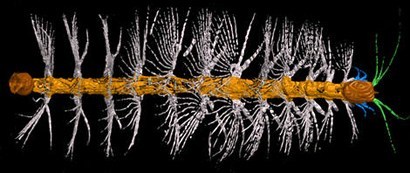
You’re chatting to someone when you begin to wonder if you’ve said it all before. Know the feeling?


I think we might have had that conversation once before.
If so, I’m very sorry – you must think me such a bore.
The memory’s not so good these days. (Oh dear, I can’t be sure,
But I think we might have had this conversation once before . . . )
[Image: sciencewith pallagi.blogspot.com]

Posted in MultiVerse | Tagged , , | Leave a comment

No place to hide

In the human male, the annular positioning of the prostate around the urethra, and
its benign enlargement in later years, is a “design fault” that evolution has yet to
deal with. Mine has just been the subject of a number of non-surgical investigations.


They’ve had a look inside me
With X-rays and ultrasound.
They seemed to be quite taken
With all the things they found.

The youthful radiographer,
As he pointed out my bones,
Said, “Good news on your kidneys -
I can’t see any stones”.

The hospital’s sonographer,
As she smothered me with gel,
Said, “You’ve got a lovely liver,
And your spleen looks good as well.

“Your prostate is a bit enlarged -
That’s natural, never mind -
And that is why your bladder
Keeps a little bit behind.

“Your kidneys, though, are normal,
On the left and . . . on the right.
Internally, your body
Is a fascinating sight”.

Well, I’m glad I made them happy
By exposing my inside.
Beware, though: with these characters
There is no place to hide.

If your State of Denmark’s rotten
They will find the source of rot -
For they get to see right through you:
What they see is what you’ve got.

[CT image (through someone else's torso): radRounds.com]
Posted in MultiVerse | Tagged , , , , | Leave a comment